7 Plants To Keep Your House Cool And Air Fresh In Summers

A natural way to enhance the quality of air and keeping our homes cooler in summers is to go for indoor plants. Plants absorb carbon dioxide and emit oxygen. A lot of potted plants are known to remove harmful toxins from air and bring down ambient temperatures, while also adding to the decor of the house. Plants tend to control humidity to within the optimum range for human health as well.
So, do not wait. This summer, try and get some of these much sought-after plants home and experience the difference. You will feel cooler, energized and positive, and may notice a significant improvement in your concentration and productivity levels too.

Areca Palm: AOne of the great living room plant is the Areca Palm Tree. With high air purifying properties, Acrea Palm removes carbon dioxide and toxins from the air. Consistently rated among the best houseplants for improving the ambient environment, Areca Palm is also an excellent air humidifier. While selecting an Areca Palm, go for a plant with a thicker trunk at the base. Plants with trunk diameter under an inch prove to be tricky to maintain.

Aloe Vera: Known for its soothing and medicinal properties, Aloe Vera is often used for treating burns on the skin.But very few people are aware of the fact that Aloe Vera also brings down ambient temperatures, making for good protection from high heats. Not just that, the plant is also found to be effective in removing formaldahyde from the air and improving indoor air quality. Plant Aloe Vera in well-drained soil and allow for some drying time in between watering.

Weeping Fig or Ficus Tree: The Weeping Fig will clean up your indoor air by removing widespread airborn toxins and by increasing oxygen levels. The plant prefers bright light and sun but is also tolerant towards poor light, with low to moderate water requirements.
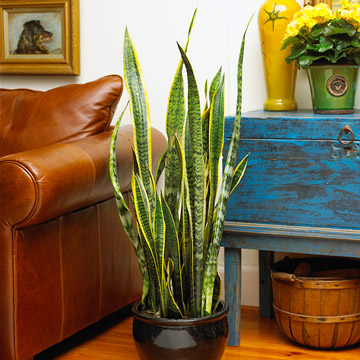
Snake Plant: Snake plant or Mother-in-law's Tongue is a perfect bedroom plant. Although most plants are known to take away Oxygen at night, Snake plant does just the opposite. It emits Oxygen at night while you sleep which also keeps the temperature of your indoors at a cooler levels in the night time. Not just that, the plant is known to absorb toxins such as nitrogen oxides, formaldehyde, trichloroethylene, xylene, toluene and benzene. Easy to take care of, Snake plant is good at managing with low light levels and irregular watering, with even less water requirements during the winter. Experts suggest that about 6 to 8 waist-high plants are needed to get the optimal oxygen output for a person.

Baby Rubber Plant: This house plant cleans up the indoor air by releasing high levels of oxygen and removing toxic chemicals such as formaldahyde. Plant the Baby Rubber in rich soil and take care to keep it in filtered light. The plant will survive infrequent watering.

Boston Fern: One of the most decorative interior plants, the Boston Fern is a natural humidifier and air purifier that cleanses the indoor air of formaldahyde and other toxins. Some call it the best of the lot in purifying air. The plant flourishes in bright light and damp soil but can also tolerate poor light and drought.

Golden Pothos: Also known as Devil's ivy or Silver Vine, the Golden Pothos can readily outgrow its original allotted space with its evergreen leaves and multiplying stems. And yet, it is often cited as among the best house plants for improving indoor air quality. When it comes to removing indoor pollutants such as formaldehyde, benzene, xylene and carbon monoxide, the Golden Pothos may win hands down. Another advantage is that it doesn't need too much watering, especially in colder temperatures and in partial sun.
Other Benefits of Indoor Plants
Apart from cooling down your house temperatures and improving the indoor air quality, interior plants are also known to have the following beneficial effects:
- Increased positivity and reduced levels of worry, stress and depression - Breathing in improved and healthier air has an impact on our overall feeling of well-being.
- Better concentration levels leading to improved productivity - a peaceful and energetic mind makes for higher concentration levels and better performance at work and at home
- Faster recovery from physical ailments and mental tiredness - cleaner indoor air quality is known to speed up recovery from diseases and exhaustion.
Interiors feel spacious, looked-after and clean - well-cared-for plants add to the beauty of your home interiors.
- Lead to better usage of space inside the house - there are studies to show that people prefer to occupy rooms with potted plants. Therefore keeping plants in various parts of the house increases the possibility of those spaces being used more on a daily basis.
- Improved image as interiors are perceived as "more expensive" - this has more to do with perception and imagery, however, research shows that interiors with potted plants are perceived to be more expensive than those without plants.